
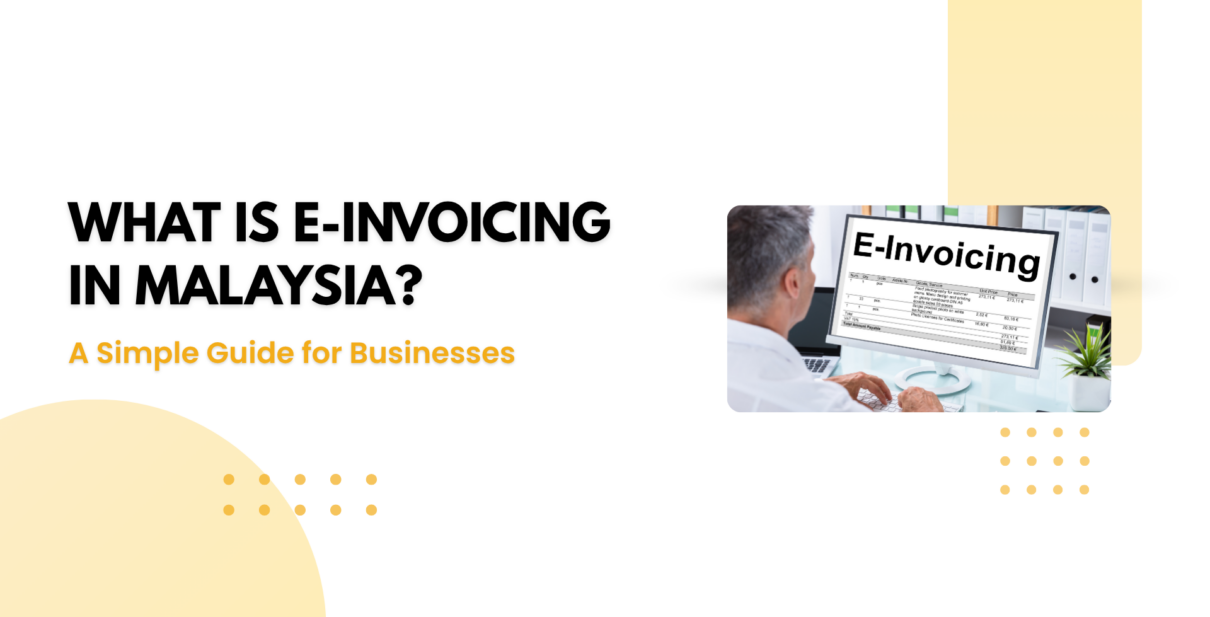
Electronic invoicing, commonly known as e-Invoicing, is a digital system used to create, validate, and transmit invoices in a structured electronic format. In Malaysia, it is being rolled out nationwide under the initiative of Lembaga Hasil Dalam Negeri Malaysia (LHDN) as part of the country’s tax digitalisation programme.
Unlike traditional paper or PDF invoices, e-Invoices are generated and validated in real time through LHDN’s system before being shared with buyers.
How e-Invoicing Works
The process of e-Invoicing is fully digital and typically involves three main steps:
- Invoice Creation
A business generates an invoice using its accounting or billing software. - Validation by LHDN
The invoice is submitted to LHDN’s system, where it is validated and assigned a unique identification number. - Sharing with Buyer
Once validated, the invoice is sent to the buyer with a QR code or validation link for verification.
Why e-Invoicing is Being Implemented
The main objectives of e-Invoicing include:
- Improve tax compliance and reduce tax evasion
- Increase transparency in business transactions
- Reduce manual paperwork and human errors
- Enhance efficiency in financial reporting
- Support Malaysia’s digital economy transformation
Who is Affected?
The implementation of e-Invoicing applies to most businesses in Malaysia, including:
- Private limited companies (Sdn Bhd)
- SMEs and startups
- Large corporations
- Certain freelancers and service providers (based on revenue thresholds set by LHDN)
Key Benefits of e-Invoicing
1. Faster Processing
Invoices are validated instantly, reducing delays in approvals and payments.
2. Reduced Errors
Automated validation helps minimise incorrect tax information or invoice details.
3. Better Record-Keeping
All invoices are stored digitally, making audits and reporting easier.
4. Improved Tax Compliance
Since invoices are reported directly to LHDN, transparency is significantly increased.
Challenges for Businesses
While e-Invoicing brings many benefits, businesses may face some challenges:
- Need to upgrade accounting systems
- Training employees to use new platforms
- Adjusting internal workflows
- Initial implementation costs
However, these challenges are expected to reduce over time as systems become more integrated and user-friendly.
Timeline of Implementation (General Overview)
Malaysia’s e-Invoicing rollout is being introduced in phases:
- Large businesses first
- Followed by medium-sized companies
- Eventually extending to all taxpayers
This phased approach allows businesses time to adapt gradually.
e-Invoicing vs Traditional Invoice
Feature | Traditional Invoice | e-Invoice |
Format | Paper / PDF | Digital structured format |
Validation | Manual | Real-time via LHDN |
Transparency | Low | High |
Storage | Physical / local files | Centralised digital system |
Compliance | Manual reporting | Automated reporting |
e-Invoicing is a major step forward in Malaysia’s tax and business ecosystem. While it may require initial adjustments, it ultimately creates a more efficient, transparent, and compliant financial environment for businesses.
As the system becomes mandatory across all sectors, early adoption will help companies stay ahead and avoid compliance risks.