
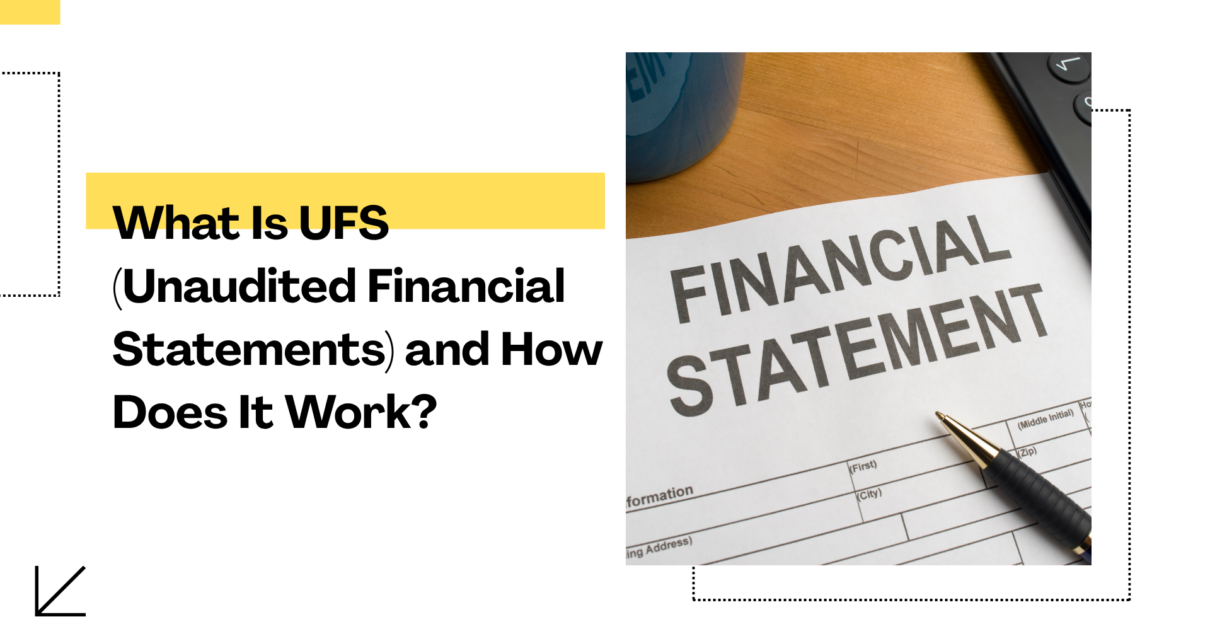
In business and accounting, you may often hear the term UFS, which stands for Unaudited Financial Statements.
Many SMEs and newly incorporated companies in Malaysia use UFS for internal reporting, management purposes, or even statutory submission for certain exempt private companies.
Understanding what UFS is—and how it works—helps business owners make better financial decisions and stay compliant with statutory requirements.
What Is UFS?
Unaudited Financial Statements (UFS) are financial statements prepared by a company without being reviewed or verified by an external auditor.
These statements typically include:
- Statement of Financial Position
- Statement of Profit or Loss
- Statement of Changes in Equity (if applicable)
- Cash Flow Statement (if applicable)
- Notes to the Accounts
UFS are still prepared based on accounting standards (MFRS/MPERS), but they are not independently audited.
When Are UFS Used?
UFS are commonly used in the following situations:
✔ 1. Management Reporting
Companies prepare monthly or yearly UFS to:
- Monitor performance
- Track profitability
- Manage cash flow
- Support internal decision-making
✔ 2. Exempt Private Companies (EPC)
In Malaysia, certain companies that meet specific conditions may be exempt from statutory audit requirements and can submit unaudited financial statements to SSM.
✔ 3. Early Stage or Dormant Companies
Startups or inactive companies may prepare UFS for:
- Internal tracking
- Tax filing support
- Compliance monitoring
✔ 4. Tax Purposes
LHDN may still require financial information even if accounts are unaudited.
UFS is often used to support:
- Tax computation
- Estimated tax submissions
- Business expense verification
How Does UFS Work?
The process of preparing UFS is similar to audited financial statements, but without external verification.
Step 1: Record Transactions
All business transactions are recorded in the accounting system:
- Sales and revenue
- Purchases and expenses
- Bank transactions
- Payroll and statutory payments
Step 2: Adjust Accounts
End-of-period adjustments are made, such as:
- Accruals and prepayments
- Depreciation
- Provision for expenses (if applicable)
- Inventory adjustments
Step 3: Prepare Financial Statements
The accountant prepares:
- Profit & Loss Statement
- Balance Sheet
- Supporting notes
Step 4: Management Review
The financial statements are reviewed and approved by management or directors.
Step 5: Usage or Submission
UFS may then be used for:
- Internal reporting
- Tax filing support
- Submission to stakeholders
- SSM filing (for eligible exempt companies)
Difference Between UFS and Audited Financial Statements
UFS (Unaudited) | Audited Financial Statements |
Not reviewed by external auditor | Verified by licensed auditor |
Faster and lower cost | More time-consuming and costly |
Used for internal or exempt companies | Required for statutory compliance (most companies) |
No audit opinion | Includes audit opinion |
Advantages of UFS
✔ Faster preparation process
✔ Lower professional fees
✔ Useful for internal decision-making
✔ Suitable for small or exempt companies
Limitations of UFS
⚠ No independent verification
⚠ Higher risk of errors going unnoticed
⚠ May not be accepted by banks or investors in some cases
⚠ Limited credibility compared to audited accounts
Common Misconceptions About UFS
❌ “Unaudited means not important”
UFS is still based on proper accounting records and must be prepared accurately.
❌ “Only audited accounts are real accounts”
UFS is still valid financial reporting—it just lacks external audit assurance.
❌ “Any company can submit UFS to SSM”
Only companies that meet specific exemption criteria are allowed.
Why UFS Still Matters
Even without audit, UFS plays an important role in:
- Business planning
- Tax compliance
- Financial monitoring
- Decision-making
- Cash flow management
Accurate UFS helps ensure your business runs with reliable financial data.
Whether your company requires unaudited financial statements, audited accounts, or tax computation support, our team can assist in ensuring your financial reporting is accurate, compliant, and ready for submission.
Contact us to learn more about how we can support your business.